Reinvention in Action
While Great Lakes Mall’s future is uncertain, other malls in Northeast Ohio are adapting and thriving.
SouthPark Mall in Strongsville, owned by Spinoso Real Estate Group and Kize Capital, has embraced reinvention. Since acquiring the mall in 2021, Spinoso has leased more than 100,000 square feet to national brands like JD Sports, Boot Barn and Activate Games. The mall has also seen growth in dining and entertainment, with popular additions like Hooley House, KPOT Korean BBQ and Lao Sze Chuan.
Behind the scenes, Spinoso has invested over $1 million in infrastructure repairs and upgrades. The company has committed to turning SouthPark into more than a shopping center. A packed calendar of more than 100 events each year — from health expos to cultural festivals — has helped reposition the mall as a community destination.
“SouthPark Mall remains one of the most dominant and vibrant retail destinations in Northeast Ohio,” says CEO Carmen Spinoso. “As the region’s largest retail campus, it continues to draw strong tenant demand, consistent foot traffic and sustained leasing activity and growth.”
The company also worked with the city to expand zoning for future mixed-use additions, allowing for new amenities like hotels, theaters or grocery stores, if needed.
“The future of enclosed malls hinges on reinvention and community connection,” Spinoso says. “SouthPark is a great example of what’s possible: a highly curated, diverse and vibrant community-centric property that blends retail, dining, entertainment and events.”
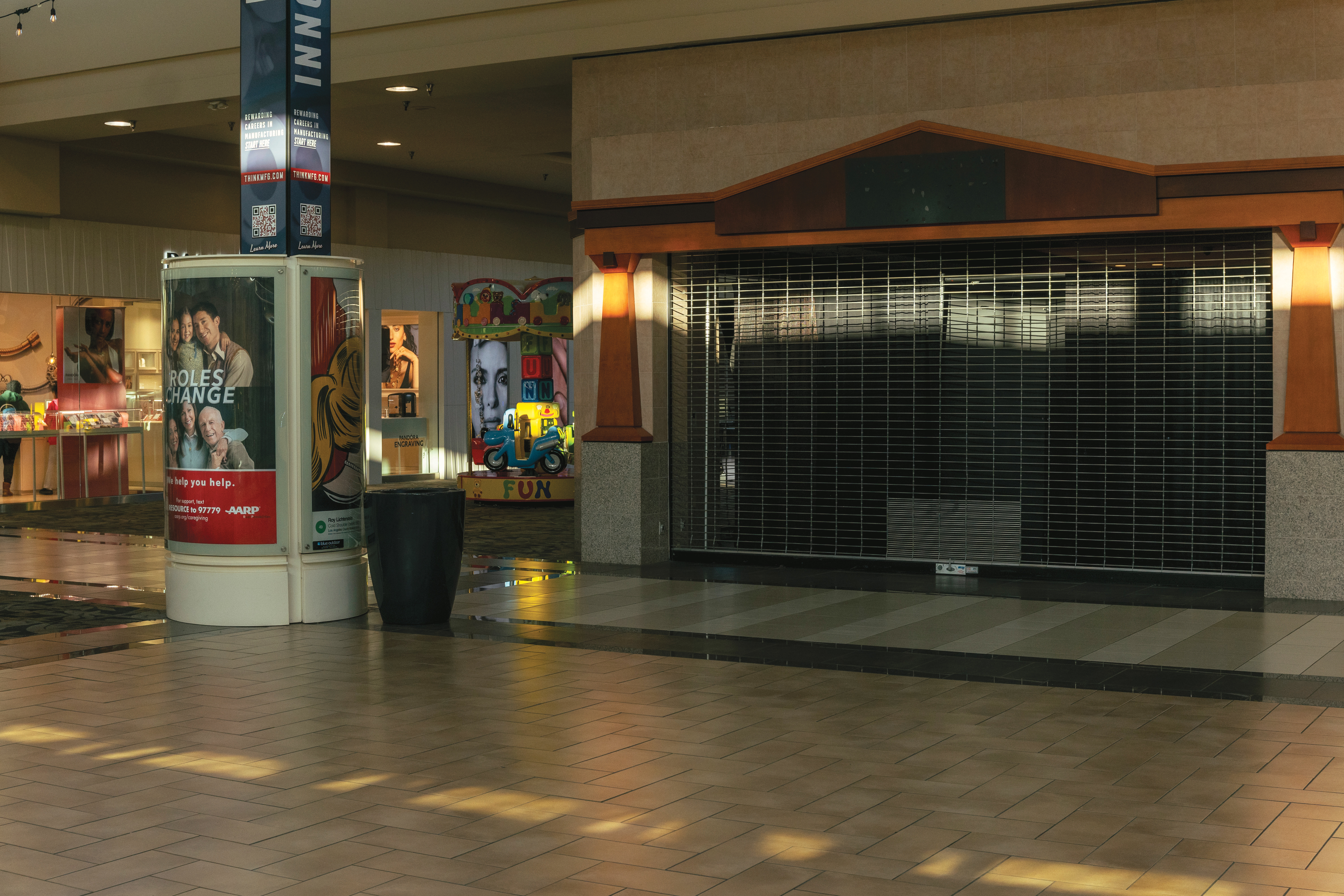
On Cleveland’s East Side, the former Richmond Town Square mall in Richmond Heights was once as bustling as Great Lakes. By the 2010s, however, Richmond Town Square had dwindled to a shell of its former self — and when its last anchors, Macy’s and Sears, went dark, the property slipped into disrepair.
Rather than attempt a retail revival, the developers and the city opted for a dramatic transformation. In 2023, the dead mall was razed to make way for Belle Oaks Marketplace, a $250 million mixed-use village rising on the same site.
The plans for Belle Oaks include nearly 800 high-end apartments and over 300,000 square feet of retail and restaurant space, along with parks, trails and civic amenities.
Phase I of the project — 487 apartments and 17,000 square feet of retail — is already underway, with Phase II set to add another 312 residences and more than 200,000 square feet of commercial development to the space.
“We started with the former Macy’s building in 2017, which we converted into self-storage,” says Sterling McGregor, president and co-founder of DealPoint Merrill, the firm behind Belle Oaks. “Then we acquired the Sears site and began working with the city to rezone the land for residential use.”
The economic headwinds of recent years — rising interest rates, tighter lending — have posed challenges, McGregor says, but the overall vision for Belle Oaks remains.
“These apartments are designed to feel like homes, with large floor plans, high ceilings, HEPA filtration and concierge services,” he says. “We’re creating a live-work-play environment with walkability and wellness in mind.”
There are also plans for a nature trail across the street that could connect to nearby Cleveland Metroparks systems.
“The mall’s gone, so this is just a completely different scenario,” McGregor says. “It’s a way to bring health, green space and activity into the space.”
He believes this model is replicable across the country.
“Many communities are grappling with abandoned malls,” he says. “They’re just not attracting people anymore for a lot of reasons — the internet, Amazon, the choice of watching movies at home and home delivery. There are just so many ways that keep people in their homes that weren’t the case in the past.”
Rosentraub points to developments like Crocker Park in Westlake and Legacy Village in Lyndhurst as examples of malls successfully evolving to meet changing consumer preferences. Unlike traditional enclosed malls, these centers blend retail spaces with restaurants, play areas and communal gathering spots, creating vibrant hubs that mimic traditional downtown settings.
“They have incorporated malls with a lot of experiential things like restaurants and play areas,” Rosentraub says. “They’re trying to create them more as town centers rather than just retail centers. Crocker and Legacy were building what I call a ‘faux downtown.’ There’s an essential element that attracts people, sometimes a fountain space or a skating rink, and then around it is different experiential retail.”
This blend of experiences and retail resonates strongly with modern consumers, he notes, because it taps into a desire for a sense of community and engagement, something traditional enclosed malls increasingly struggle to provide.
“People like the feeling of the downtown, the walkable downtown in a very safe environment,” Rosentraub adds.
Yet, even these vibrant centers aren’t immune to broader retail transformations driven by evolving consumer habits. Rosentraub emphasizes that the growth of online shopping, accelerated by the COVID-19 pandemic, continues to reshape how retailers operate and the kinds of spaces they seek.
“If you looked at the data on online sales, it’s rising at about a 30-degree angle going up,” Rosentraub says.
Despite these dramatic changes in retail, Rosentraub emphasizes that such shifts in land use are not unprecedented.
Throughout history, urban spaces have continuously evolved to meet new demands, adapting to shifting economic and social needs.
“Land use always changes,” he says. “When the mall closes, it’s not like the land is going to lie fallow for decades. Mentor is a good location. It needs a different asset. I don’t know what that asset is because I haven’t studied it yet, but something new will emerge.”
Rosentraub acknowledges that while such changes make sense economically, they inevitably evoke strong emotional reactions from community members. He likens the nostalgia surrounding malls to the emotions experienced when a family home is sold.
“It’s the right thing to do economically, but there’s that emotion tied to it,” Rosentraub says. “You may not personally like what the land use is going to be, but that’s what market forces do. They can’t sustain themselves.”
link