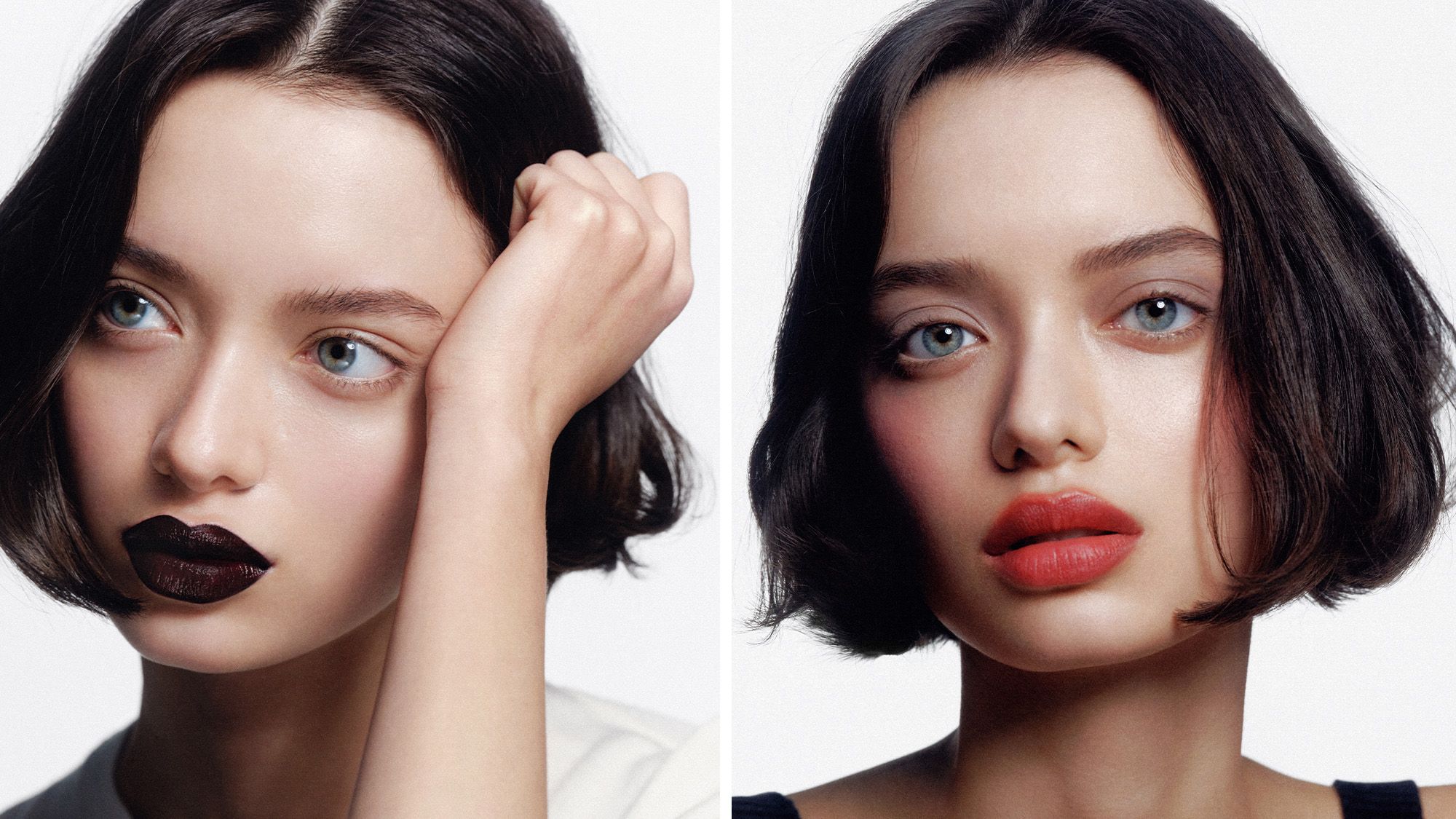
A friend of mine recently disappeared. I usually see her around my neighbourhood but for a while she might as well have fallen down a well, for all I knew. Then just as suddenly she was back, looking the same but different.
You know where this story is going: yes, she’d had some “work done”, a term once only used for home renovations but now referring to when people (women, in the vast majority) do renovations on their face.
So-called “injectables” — ie, Botox and fillers, the jauntier lo-fi version of old school plastic surgery — have become so ubiquitous that being an unBotoxed woman in her forties, as I am, feels as retrograde as having a two-packet-a-day cigarette habit.
And yet the reason my friend disappeared was because her “tweakment” had gone wrong. She’d had filler injected under her eyes to mitigate the hollows, which I’d thought were part of the skull, but are now apparently bad. Yet one hollow got too much filler, so her eye puffed up like a ping-pong ball and she had to stay inside so as not to scare small children.
To the tune of a certain Sound of Music song: “Oh how do you solve a problem like the adult woman?” When you’re under 40 you’re taught to obsess over your weight; when you’re over 40 you’re commanded to fret about your age.
Even those of us who parrot platitudes such as “getting old is a privilege”, and “natural is better”, and actually believe them, are not immune to the messaging that we need to do something about our crone-like faces immediately. Since turning 45, I’ve made and cancelled more appointments at aesthetics clinics than I’ve had holidays.
I make them in the belief that, in a life full of uncertainties, at least I can do something proactive, even if it is just freezing my face. And then I break them when I remember that anti-ageing treatments come in two varieties: the tweakments you need to get redone several times a year, at a cost of hundreds of pounds, at which point you might as well develop a class A drugs habit; or the operations, in which your face is sliced up like a scene from the Luis Buñuel film, Un Chien Andalou.
Last year the number of people in Britain getting tweakments went up by almost 30 per cent. And yet, according to a TV survey last month of 2,000 women, 50 per cent of those who had tweakments suffered complications.
You can always tell how little a government cares about women’s safety by how long it takes to deal with extremely obvious failings in industries used predominantly or entirely by women (see: maternity services). So it took until last week for the government to announce that from now on, aesthetics clinics will need to be of a certain standard to be licensed. Well, I say “from now on”, but it will be years before any of this comes into effect.
But even that aside, my (unfrozen facial) reaction to this was twofold: first, how has it taken the government this long to deal with cosmetics cowboys? And second, how much difference is this actually going to make?
No longer can politicians dismiss cosmetics services as an irrelevance used only by rich, vain women, not when they’re increasingly being used by men and advertised to teenagers on social media as a “preventative”. The NHS is fixing rising numbers of botched procedures every year, at an average cost of £15,000 per patient. Of course the dangerous needle wielders need to be shut down.
But the real problem is, like the pornography industry, the beauty industry will always push extremes, partly to look edgy, but mainly to make us spend money.
Women are looking better for longer naturally, because fewer of us are smoking. The ironic downside is that this means beauty standards for women have become more narrow and ridiculous, because the goal must always be out of reach. Last month Vogue even ran an image of an AI model, as if conceding this point. If someone 40 years ago had seen a photo of, say, Nicole Kidman, or any member of the Kardashian-Jenner family, they’d have thought they were looking at caricatures.
Awards shows look like the alien bar in Star Wars, all those puffy lips and arched eyebrows. And those are the “natural”-looking ones. Twenty or thirtysomethings who get Botox and fillers look the same age as their forty and fiftysomething counterparts, because tweakments don’t make anyone look younger — they just make everyone look weirdly interchangeable and ageless, like you’re looking at them through a smudgy window pane.
It’s easy to say women should ignore all this, but it’s amazing how quickly our eyes grow accustomed to the extremes, especially when we see those extremes on the faces of our friends. Also, breaking news: ageism still exists. It doesn’t help that we’re seeing more photos of ourselves than ever, which is just another way smartphones are driving us all so crazy.
The great 1992 film, Death Becomes Her, starring Meryl Streep and Goldie Hawn, foresaw it all, with its plot about women who chase youth even as their insides decay. Nora Ephron put it even more bluntly almost 20 years ago, describing tweakments as “pathetic attempts to turn back the clock”, and we all know she was right, even as we kid ourselves that injecting botulinum into our face is “self-care” and “for us”. Hint: when it’s that painful and that risky, it’s never for you.
The lie never changes. Until one day you realise that all the time, thought and money you wasted over this might as well have been spent punching yourself in the eye.
link