In Lafayette, Macy’s is closing its longtime anchor store in the Mall of Acadiana as the department store chain continues to downsize across the country. In Metairie, discount outlet Big Lots is in the process of shutting down its Veterans Boulevard store as its parent company navigates bankruptcy.
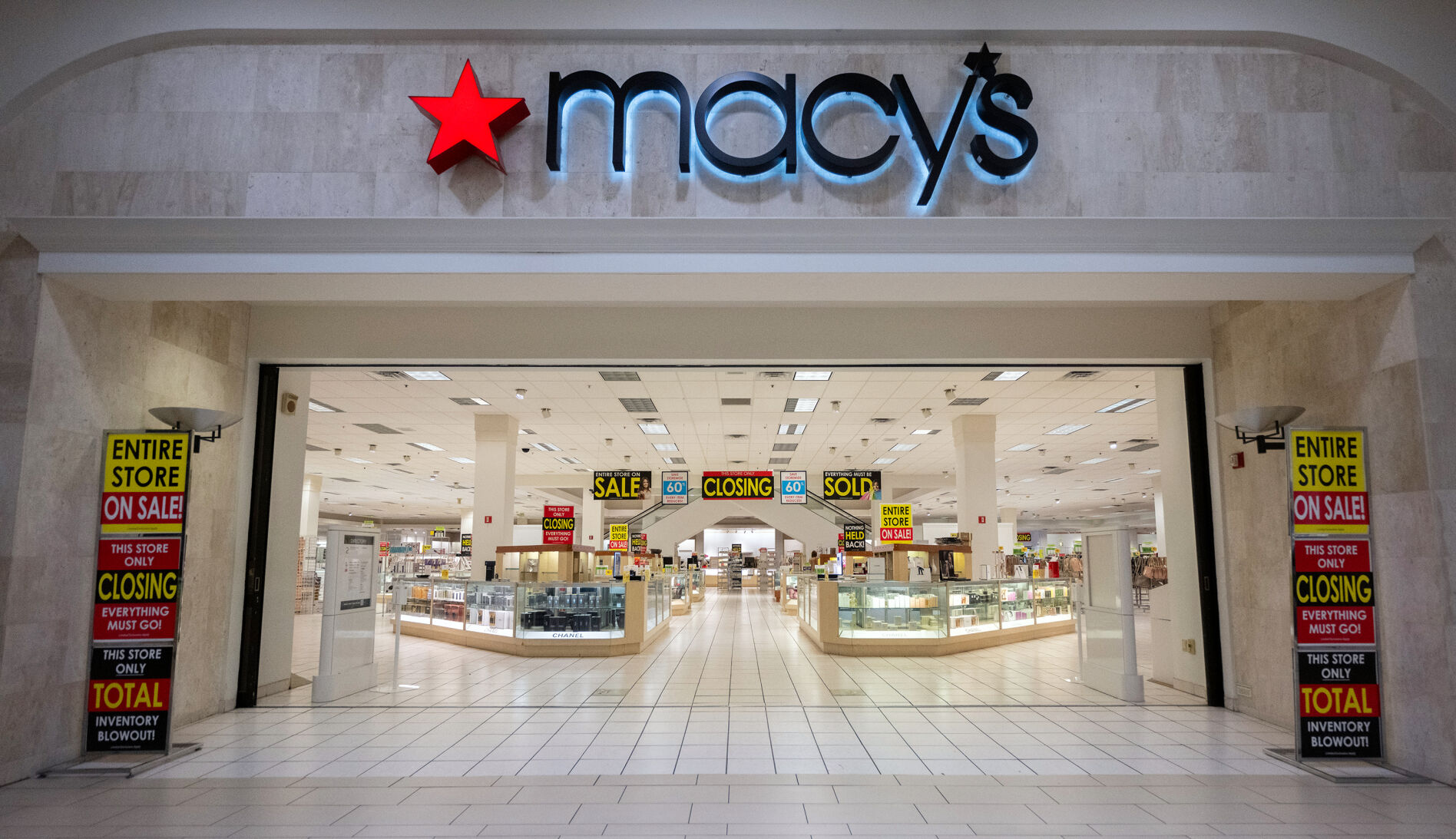
Store-closing and sale signs are displayed at MacyÕs Friday, February 7, 2025, at the Acadiana Mall in Lafayette, La.
And New Jersey-based Party City is shutting down all eight of its locations in Louisiana because the party supply retailer is going out of business.
Yet, amid what seems like terrible times for brick-and-mortar stores, Canal Place in downtown New Orleans recently added a new Swarovski Crystal store to its mix of high-end tenants, while Lakeside Shopping Center is building out new spaces for trendy retailers Mango and Alo Yoga.
Confused? You’re not alone.
More than a decade after e-commerce upended the way people shop, the industry is still in flux with changes reverberating in Louisiana. Commercial property brokers, mall executives and other market watchers say some stores are improving their prospects with in-person shoppers while others are seeing their sales fall — or are going out of business altogether.
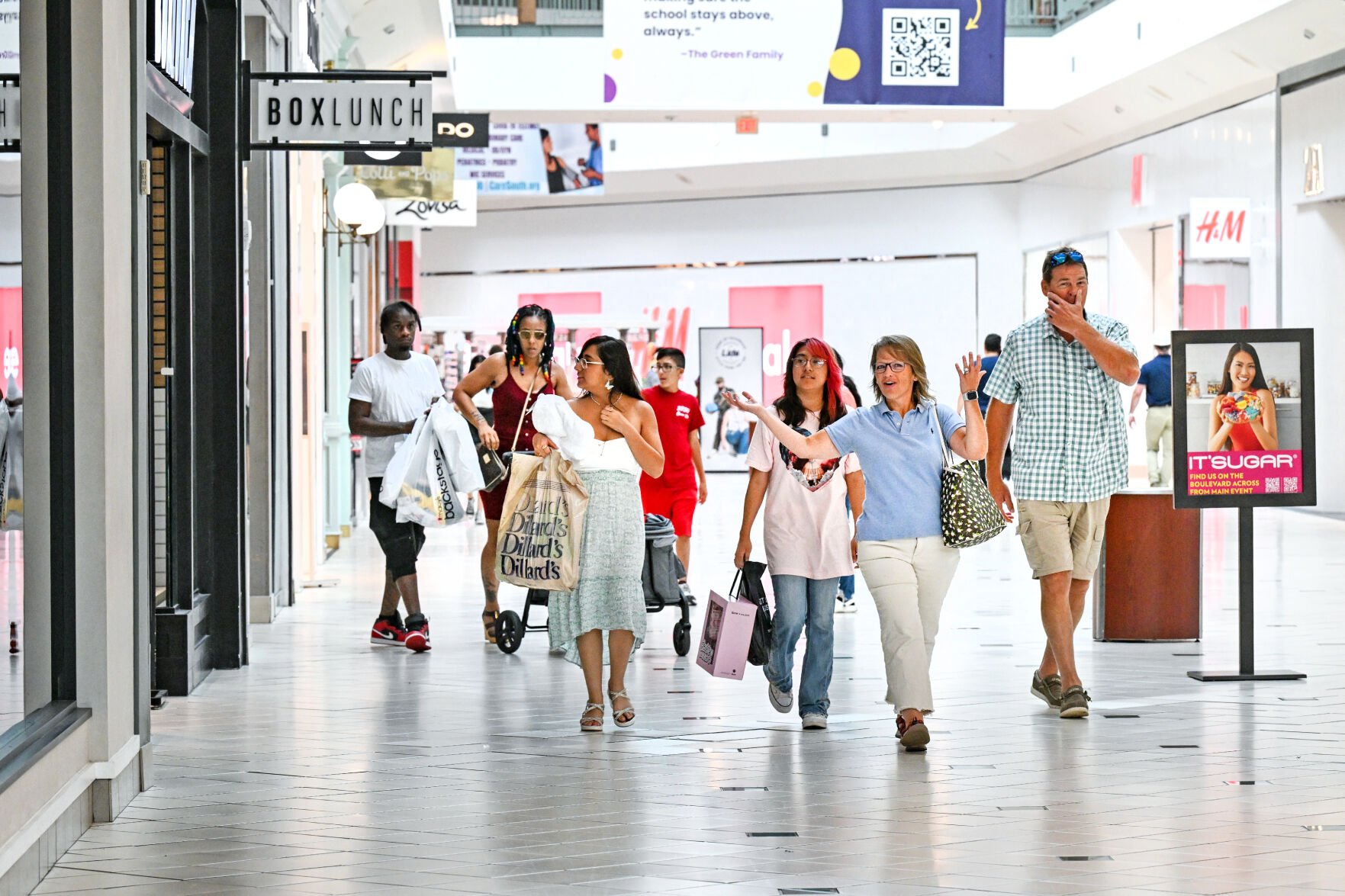
People walk and shop at The Mall of Louisiana on Tuesday, June 25, 2024.
“It’s hard to explain a little bit because it seems like there are contradictory trends,” said Ryan Pecot, a commercial agent with Stirling. “The reality is there are a few different things going on.”
Macro trends
Part of the reason for the seemingly incongruous trend, with some retail sectors seeing improvements while others slip, is a widening wealth gap and the impact of inflation on middle- and lower-income Americans.
A recent report by Moody Analytics found that the top 10% of earners, those who make $250,000 a year or more, accounted for nearly half of all spending in America last year, compared with about two-thirds of all spending 30 years ago, The Wall Street Journal reported.
Spending by the wealthy on new cars, homes, pricey clothes and luxury goods is rising quickly, too, and outpacing inflation. From September 2023 to September 2024, top earners increased their spending by 12%.
Spending by working-class and middle-class households dropped over the same period.
“There is definitely a gap between the haves and the have-nots, and that has an effect on retail,” Pecot said.
Higher-end malls like Canal Place are reaping the benefits of more spending by well-heeled shoppers, which includes a mix of tourists, locals and a regional drive-in market, according to manager Matt Brown.
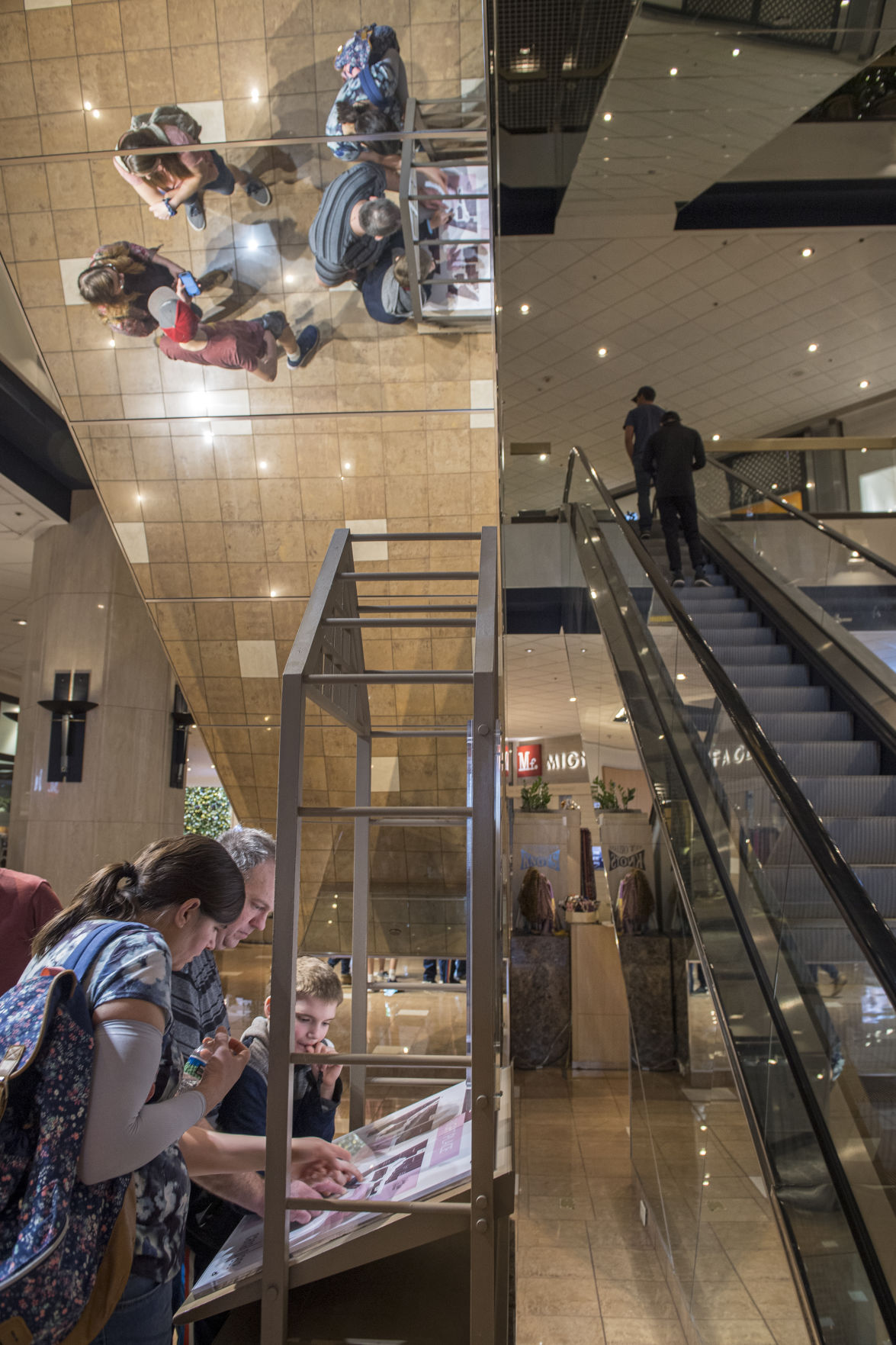
Black Friday shopping at Canal Place in New Orleans on Friday, November 29, 2019.
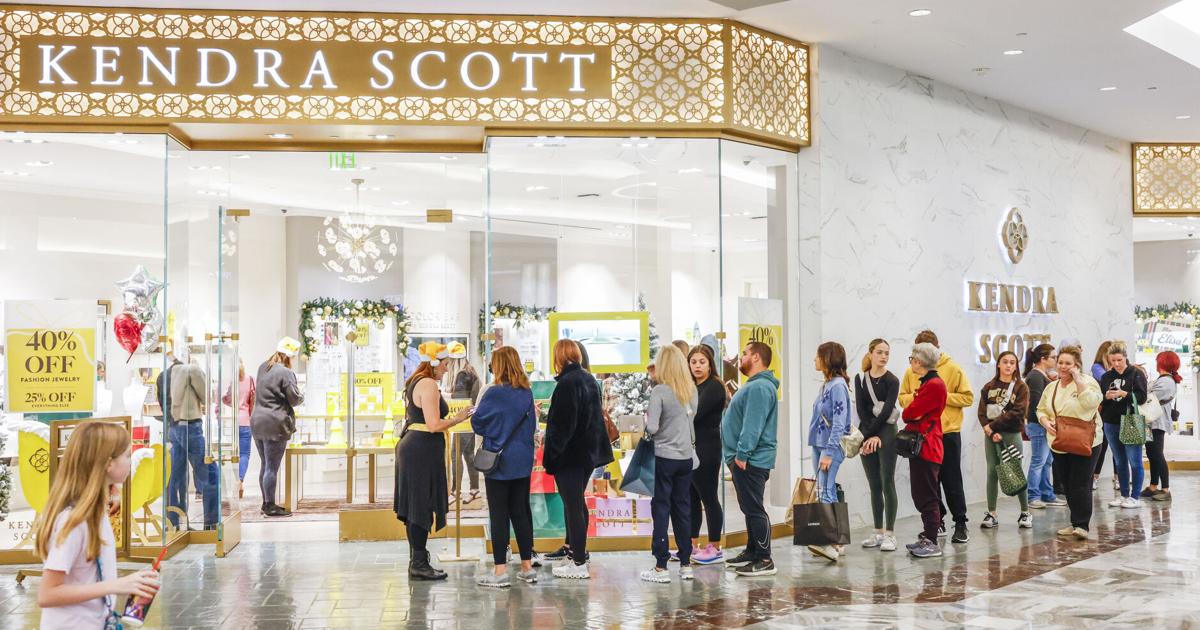
With the February opening of Swarovski, the shopping center is 95% leased, with a tenant mix that includes Louis Vuitton, Tory Burch, Tiffany & Co. and longtime anchor Saks Fifth Avenue, among others.
“The majority of our first-floor tenants are only located here, in Houston and Atlanta, so it’s really a regional luxury destination for shopping,” said Brown. “We’re thriving.”
The boom is also apparent at Lakeside, a regional mall in Metairie that averages around 99% occupancy. In late February, the mall announced that Spanish fashion retailer Mango will open a 5,500-square-foot store later this spring across from Arhaus, the trendy furniture store that relocated from the South Market District near the Caesars Superdome to Lakeside last year. California-based activewear brand Alo Yoga will also open a new store this spring in a 5,000-square-foot space.

Kynlee Simoneaux (left) walks with friend Ashyln Gilbert and mom Alana Simoneaux while enjoying the morning of shopping on Friday, November 25, 2022 at the Mall of Louisiana in Baton Rouge, Louisiana.
“Lakeside is a behemoth that continues to reinvent itself, and it’s in a prime location to attract a variety of shoppers, including those who have a lot of spending power,” said Kirsten Early, a principal and longtime commercial agent with SRSA.
Department store struggles
While some luxury stores are expanding and thriving, longtime chains like Macy’s, which has been closing stores for nearly a decade, and JCPenney continue to struggle, much as Sears did before it shuttered most of its stores five years ago.
Part of the problem with those traditional department stores is that they tried to be too many things to too many people and couldn’t compete with online retail, said Pecot. The same goes for discount chains like Party City, Big Lots and Bed Bath and Beyond, the latter of which went out of business in 2023.
“Who is going to go to Party City when you can order the same thing with more selection online, and have it delivered to your door in a day?” said Pecot.
Of course, there are exceptions. Not all high-end stores are doing well, and not all discount chains are doing poorly. Midtier retailers like Marshall’s, T.J. Maxx and HomeGoods, which share a corporate owner, and Ross Dress for Less are doing well in Louisiana and looking to open more stores, according to commercial brokers in Metairie and in Baton Rouge.
“To an extent, it comes down to the company and how well it is run and if it is able to deliver decent quality at the right price point,” Early said.

People walk and shop at The Mall of Louisiana on Tuesday, June 25, 2024.
A retailer’s success these days also comes down to their ability to pivot and respond to changing consumer tastes. The longtime Barnes & Noble in Baton Rouge’s Citiplace, an aging strip center that has lost a number of tenants over the past decade, is leaving its 20,000-square-foot location and moving down the street to a new, smaller store in the high-end Towne Center, according to Jonathan Walker, a commercial agent with Maestri Murrell.
Rival bookseller Books-a-Million went in a different direction in Lafayette. The chain moved out of its pricey, 12,000-square-foot location on an outparcel near Target and moved into a larger store nearby, rebranding as a 2nd & Charles and changing up the merchandise mix to include new and used books, music, games and pop culture items.
“They’re doing well now,” Pecot said. “It was a real success.”
Too expensive to build new
One of the biggest problems retailers face is the lack of availability of new space. Though there are plenty of vacant storefronts in older strip centers across the state, rising inflation, interest rates and insurance premiums have chilled most new retail construction.
“Most of the leasing we are doing is in existing shopping centers because of the cost,” said Walker. “And even there, it’s so expensive to do a build-out, it’s mostly high-end retailers that can afford it.”
Early said she has had to turn some deals away because there isn’t enough new retail space in prime locations, which is slowing growth.
“Where is the new construction?” she said. “That is what everyone is asking, and the answer is, there is none.”
link