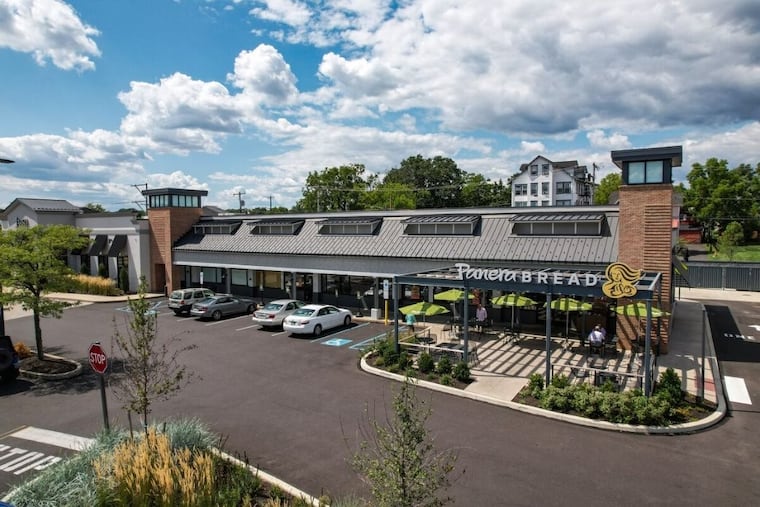
The rise, fall, and rise again of the American shopping mall has been the subject of much controversy over the past decade or more, but according to a recent Forbes report penned by senior contributor Pamela Danziger, the mall could be the next proving ground for upstart retailers looking for a novel foothold.
Danziger noted that, last year, 1,300 more stores closed than opened throughout 2024 — and that real estate firm Cushman & Wakefield suggested that Q1 2025 was the softest quarter in terms of store leasing rates since the COVID-19 pandemic kicked off in early 2020. Cushman & Wakefield data further indicated that 6 million more square feet of retail space was vacated during that time frame than was occupied, with projections looking to continue that trend by the time this year draws to a close.
The Forbes writer cited Placer.ai’s Shira Petrack on the subject, pointing to recent upticks in mall traffic for both indoor and outdoor venues.
“April 2025 mall data reveals a significant upswing in mall traffic across all formats along with an increase in average visit duration, demonstrating a recovery that extends beyond the influence of the Easter calendar shift,” Petrack said.
“These positive trends reveal malls’ continued role as key destinations for shopping and leisure — even in times of economic headwinds,” she continued.
Retail Leasing Demand Remains High, but Malls Present an Opportunity
There is a caveat, however: ICSC vice president of research and public relations, Stephanie Cegielski, told Danziger that demand for physical retail spots is relatively high, with vacancy rates dropping to just 5% last year. However, indoor malls are exhibiting a 9% vacancy level, and with a relative slowdown in terms of rent growth, that combination could exhibit opportunity for retailers hungry for a brick-and-mortar footprint.
A desire for smaller format stores, DTC brands wanting to conduct a pop-up or to establish a real-world billboard, and Gen Z’s stated appetite for in-person or experiential shopping could spell profitability for those who take the leap. Malls, at least the most attractive of them, have changed their composition drastically from the supposed heyday of the ’80s, ’90s, and early ’00s.
“Mall composition used to be about 70% apparel and now [it’s] around 30%,” Cegielski stated. “Malls and shopping centers now are offering many different types of experiences that make them appealing destinations.”
Gen Z, DTC Brands, and Consumers More Broadly May Pine for the Mall Experience
Danziger pointed to the oft-cited interest exhibited by younger Americans, particularly members of Gen Z, for in-store shopping experiences. Data from L.E.K. Consulting suggested that nearly two-thirds (64%) of Gen Z shoppers would rather shop at a physical store than online, with almost three-fifths (59%) of their older counterparts, millennials, saying the same.
Cegielski highlighted that Gen Z finds it exciting to see brands they’ve discovered on platforms like TikTok brought to life in physical spaces — a trend fueling what many in retail call “experiential retail.” Contrary to common belief, she added, this generation is highly motivated to shop with friends or family, valuing social interaction as a key part of the experience.
Furthermore, DTC brands could capitalize on the opportunity to utilize the physical storefront as a “living, breathing billboard” in an era wherein competing in digital marketing is both expensive and dubious in terms of reach and conversion. Now that malls are converting spaces into activity centers, entertainment venues, medispas, and adjacent residential areas, experiential retail could revitalize the traditional American mall, bolstering a long-lasting second wind.
“When I started with ICSC eight-and-a-half years ago, there was very much a distinction between physical and digital retail. Now both need to [be] part of the overall business strategy or else you’re going to lose customers and miss out on critical revenue,” Cegielski said.
“Now everyone realizes that people still want to and will continue to want to come to a physical space. Despite online shopping and all the time people spend on social media, they still want to have real-world experiences, make it fun and have something to share with their friends and family. That’s what malls and shopping centers offer,” she added.
link