Key Takeaways:
- Glamorous grandmas are reshaping beauty, replacing youth obsession with confidence, charisma, and lived-in glamour that resonates across generations.
- Brands embracing 60+ ambassadors, longevity beauty, and multigenerational storytelling are capturing cultural relevance and commercial growth.
- Older women are becoming digital powerhouses, proving the most influential beauty icons of 2025 might just be grandmothers.
For years, aging in beauty was something to fight, blur, conceal, or fix. But in 2025, a new archetype has burst into the cultural spotlight: the glamorous grandma. Not the soft-focus, cardigan-clad trope but instead a confident, stylish, culturally fluent elder with better skin, better jokes, and often a bigger audience than the 24-year-olds trying to go viral.
Across beauty, fashion, and media, older women are being reframed not as background characters but as aesthetic protagonists. Brands are swapping the pursuit of eternal youth for something far more resonant: an ageless glamour, seasoned charisma, experiential authority, and the appeal of women who have lived enough life to know who they are.
This shift isn’t happening in isolation, with the rejection of anti-aging rhetoric, the rise of longevity culture, and the spending power of 50+ consumers. Grandmas are no longer just loved; now, Gen Z’s obsession with authenticity and the “grannycore” irony means our grannies are aspirational.
Beauty brands take notice.
Brands Leaning into “Grannycore”
Sarah Creal, co-founder of Victoria Beckham Beauty and founder of her namesake brand, is reshaping the visual language of beauty by banning models under 40 from her campaigns. Sarah Creal Beauty is one of the most sophisticated drivers of the glamorous grandma trend because it architects beauty around them. By refusing to photograph anyone under 40, Creal rewrites the visual language of an industry long dominated by youth worship and anti-aging fear tactics.
The brand treats aging as an aesthetic evolution of something earned, lived in, and worthy of celebration. Sarah Creal Beauty uses science-forward formulas tailored specifically for women aged over 40—positioning beauty for mature consumers as a reward instead of a compromise in a landscape where Gen Z has glamorized grandmas and boomers demand authentic representation. Creal’s brand stands as a blueprint for the future.
Beauty brands are increasingly turning to Gen X and boomer celebrities not as nostalgic callbacks but as powerful engines of contemporary relevance. Kris Jenner’s partnership with MAC Cosmetics marked a turning point in how the industry views older consumers: not as a niche, but as culture-makers with cross-generational influence and massive spending power. Jenner, at 69, embodies the modern “glamorous grandma”—a woman whose authority, humor, and polish resonate with Gen Z as much as with boomers.
Her Studio Fix campaign, which followed viral teasers, a staged leak scandal, and a smartly executed social rollout, positioned Jenner not as a heritage face but as a beauty blueprint. And she’s far from alone. Lancôme tapped 83-year-old Martha Stewart (“the original influencer-dom matriarch”), while Charlotte Tilbury enlisted Kim Cattrall, and L’Oréal Paris named Gillian Anderson as its newest global ambassador. Across the board, the industry is rewriting who gets to define glamour.
This strategic shift reflects a simple truth: Older women now set cultural trends rather than follow them. Gen X and boomer icons bring built-in trust, global name recognition and a digital fluency often underestimated by marketers. Stewart’s cheeky Instagram fragrance campaign, Anderson’s thoughtful, sensual L’Oréal positioning, and Paulina Porizkova’s return as an Estée Lauder muse show a generation reclaiming visibility—and brands learning that authenticity and authority convert far better than manufactured youth.
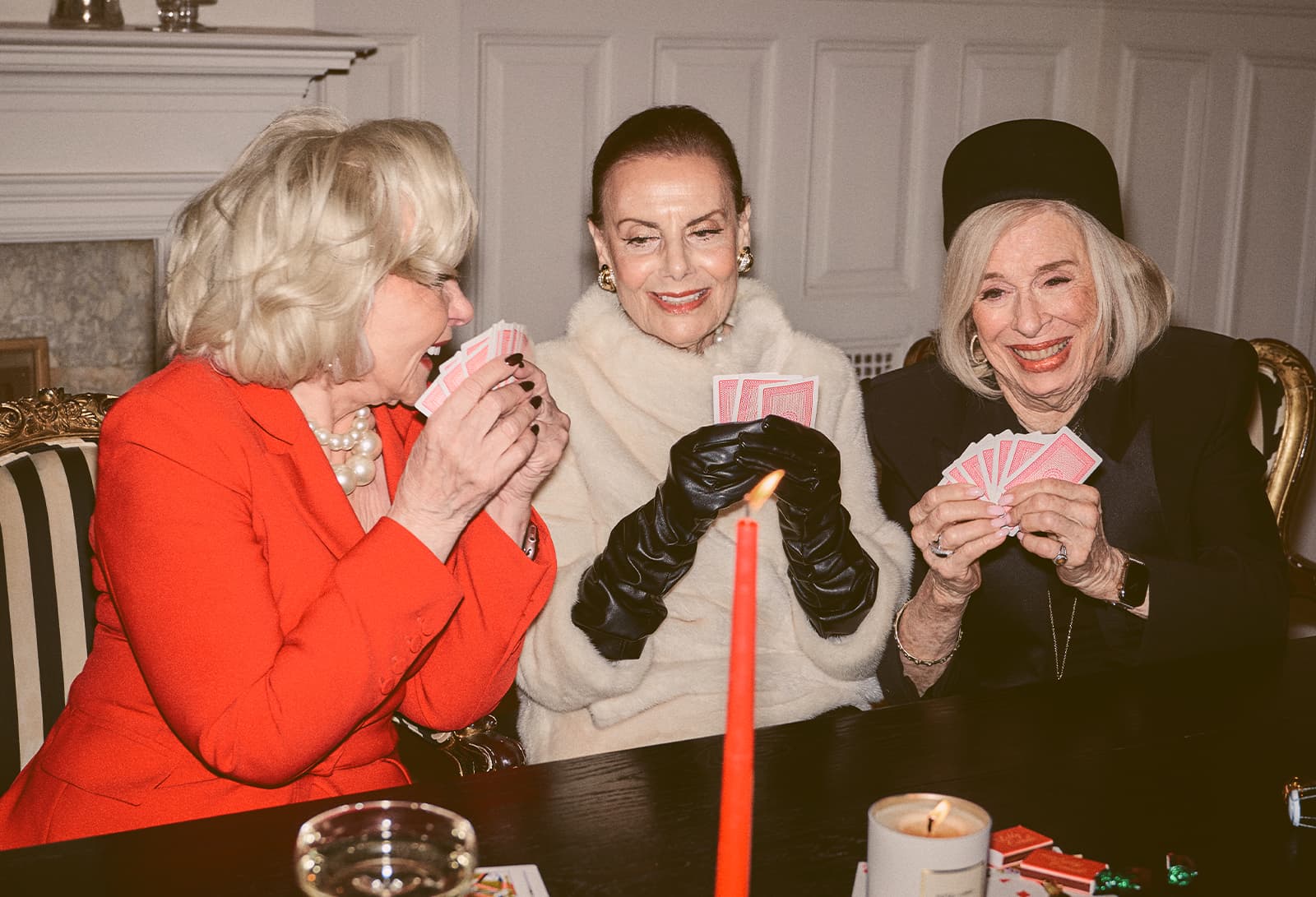
Hotel Lobby Candle’s “Grand Holiday Collection” stands as one of the most culturally resonant expressions of the glamorous grandma movement—a campaign that didn’t just feature older women, but elevated them into full-fledged lifestyle icons. Founder Lindsay Silberman cast three magnetic, real New York grandmas—Paula Lustbader (90), Renée Fisherman (87), and Marge Senior Kiss (79)—after discovering no major agency represented women over 80, prompting a viral community casting call. The resulting imagery, dripping in fur, jewels, wit, and unapologetic Park Avenue glam, wasn’t nostalgic; it was aspirational.
Silberman told BeautyMatter the decision was both “instinctive and strategic,” as a way to break through the crowded holiday beauty landscape while honoring the “old New York” sophistication that inspired the scents.
REFY’s recent “Iconic Never Gets Old” campaign marked a breakthrough moment in age inclusion because REFY is the Gen Z-favorite brand chose to cast four silver-haired women as its beauty muses. For a digitally native brand built on viral brow gels and community-driven product drops, the decision was both unexpected and culturally sharp.
REFY reframed aging as an aesthetic, not a limitation, presenting older women as confident, stylish, and effortlessly modern; exactly the qualities its young audience aspires to.
The campaign challenged narrow digital-age beauty norms and helped younger consumers unlearn their fear of aging. As anticipation for the brand’s next launch built through its Paper Shop activation in New York, the message was unmistakable: In 2025, cultural credibility comes from multigenerational representation, and the coolest woman in the room might just be someone’s grandmother.
Grandma as the Social Media Influencer
The rise of glamorous grandmas isn’t just happening in brand boardrooms. It is unfolding at scale on social media, where older women have become some of the most compelling, high-performing creators of the moment.
At the forefront is Grece Ghanem, the white-haired fashion influencer with 2.1 million Instagram followers whose striking silver bob and impeccable tailoring consistently outperform younger counterparts. Ghanem embodies a new digital archetype: the chic, ageless muse whose style is aspirational to 20-somethings and validating to 60-somethings. Her presence signals a shift in what “influence” looks like—less about youthful perfection, more about confidence earned over decades. In an era where authenticity drives engagement, older women are proving to be digital powerhouses, not outliers.
On TikTok, the momentum is even louder. The viral series “Do Men Ever Change?” by @closefriendjak, in which local New York mature women are asked whether men can indeed improve with age (spoiler alert: They don’t change), has become a cultural touchpoint—one video alone has amassed 14.2 million views.
The format works because it spotlights older women as wise, witty truth-tellers; the kind of straight-shooting grandmas Gen Z loves. Then there’s Grandma Droniak, the 94-year-old TikTok superstar with 14.9 million followers and over 470 million likes, whose comedic timing and glamorous self-presentation have made her a fixture of online culture.
Bemi Orojuogun, better known as Bus Aunty, has become one of the most powerful cultural touchpoints fueling the trend, proving joy, style, and charisma don’t come with an age limit. Her feel-good TikTok videos, featuring nothing more than her infectious smile, colourful scarves, and London’s iconic red buses, have amassed 26.2 million likes and turned her into a multigenerational icon. What makes Orojuogun significant in the beauty and fashion conversation is that her appeal mirrors the heart of this movement: Audiences aren’t drawn to perfection; they’re drawn to presence, warmth, and lived-in glamour. That authenticity led to Orojuogun becoming the face of major brand campaigns—including Burberry’s “Back to the City”—and winning video of the Year at the TikTok Awards (UK and Ireland).
Orojuogun’s unexpected rise has made her a highly sought-after collaborator, appearing in campaigns for H&M, IKEA, Jacquemus, Maybelline, JBL, and MAC Cosmetics. She also became part of promotional content around MCoBeauty’s UK launch, cementing her relevance not just in fashion but in mass-market beauty. For younger audiences, Orojuogun functions as a digital “glamour granny” who is a figure who feels like home, yet carries an effortless cool that transcends generations. For brands, she represents a blueprint for the future: older women who command cultural capital, shape trends, and generate massive engagement. In many ways, Orojuogun is the glamorous grandma trend in its purest form, working as a reminder that charisma, confidence, and community-building only get stronger with age.
link